The late afternoon sun hovered above the road like a weary lamp, its heat resting heavily on windshields and tired minds. John, exhausted from the pressures of life, with a sick child, unfinished paperwork, and a restless mind, felt his patience draining in the slow crawl of traffic.
Then it happened. A driver behind him surged forward, flashing headlights and shouting from a rolled down window. Something inside John, something he didn’t recognize as fully himself, rose like a flash-flood. He stepped out of the car. Words flew, harsh and hot. A minor shove. A misstep. A fall.
And suddenly someone was hurt. The police came. The reports were written. And John, sitting alone in a small, echoing cell, realized that sometimes a life doesn’t crumble in a long, slow descent—it collapses in thirty seconds of unguarded anger.
It wasn’t planned. It wasn’t wanted. It simply…happened. Like an anaphylactic reaction, sudden, overwhelming, and profoundly destructive.
Medicine offers a remarkable parallel. Some of the body’s most violent reactions appear to erupt without warning, yet they are often the culmination of processes that have been unfolding quietly for years.
Johanna had no reason to fear a peaceful Sunday picnic, until a single bite of a cookie made with a trace of hazelnut awakened an old immune memory buried deep within her body. Within minutes her lips tingled, her skin flushed, and her throat tightened as her immune system, mistaking the harmless nut for a mortal enemy, unleashed a tidal wave of histamine that constricted her airway and dropped her blood pressure. Panic blurred the moment, but a friend quickly injected epinephrine, the medicine racing through her bloodstream like a calming command that opened her airways and steadied her pulse. The episode seemed instantaneous, but in truth the reaction was years in the making. Before that picnic, Johanna’s immune system had already encountered the allergen, misidentified it as dangerous, and stored that mistake in its memory. The cookie did not cause the reaction out of nowhere. It merely awakened a response that had been waiting silently beneath the surface.
In medicine, anaphylaxis is the body’s form of a lightning strike; a rapid, life-threatening allergic reaction. It is a serious, potentially fatal medical emergency that is rapid in onset and requires immediate medical attention regardless of the availability of on-site treatments while not under medical care.
Within minutes, a simple trigger like a peanut, a bee sting, or even a medication can send the immune system into chaos. The body panics. The airways narrow. Blood pressure collapses. The entire system reacts disproportionately to a threat that, under normal circumstances, would be harmless, like Johanna above gasping for breath after eating a cookie, or a hiker stung by a bee feeling her throat close, or a patient given an antibiotic erupting in hives, dizzy, and pale.
When a severe allergic reaction occurs, every second matters. The first and most important treatment is epinephrine, a medication usually injected into the thigh. It acts quickly, interrupting the body’s dangerous overreaction before it becomes fatal. The airways relax, blood pressure rises, and circulation begins to stabilize. Additional doses or intravenous fluids may sometimes be required, but the principle remains the same: the faster the reaction is interrupted, the greater the chance of recovery. Doctors may also administer intravenous fluids to support blood flow, while the patient is laid flat with the legs slightly elevated to help restore circulation to the heart and brain.
Other medications, such as antihistamines and steroids, may help relieve symptoms, but they are not substitutes for epinephrine. Individuals who have previously experienced anaphylaxis are strongly advised to carry an epinephrine auto-injector (commonly known as an EpiPen) and wear medical identification. Even when symptoms improve after treatment, emergency medical evaluation remains essential, as the reaction can recur unexpectedly.
Fortunately, anaphylaxis is relatively rare. Although estimates vary, it affects only a small percentage of the population, and with prompt recognition and treatment, survival rates are exceptionally high. It tends to occur more in young people and in women. Nearly everyone who receives timely hospital care recovers.
What actually causes anaphylaxis?
Before someone ever has an anaphylactic reaction, their immune system must first “learn” to recognize an allergen (such as peanuts, bee venom, or certain medications). During this first exposure, sensitization (immune memory formation) takes place, and the immune system mistakenly identifies the allergen as a threat. Then, it produces IgE antibodies that attach to mast cells and basophils. These IgE-coated cells “wait” for the next exposure.
Anaphylaxis happens during the next exposure (which might be years later). When exposed, the allergen binds to the IgE antibodies and mast cells release massive amounts of histamine and other mediators. This causes anaphylaxis in the form of hives, swelling, low blood pressure, airway tightening, etc.
Anaphylaxis symptoms usually occur within minutes of exposure to an allergen. Sometimes, however, anaphylaxis can occur a half-hour or longer after exposure. In rare cases, anaphylaxis may be delayed for hours. Signs and symptoms include:
- Skin reactions, including hives and itching and flushed or pale skin
- Low blood pressure (hypotension)
- Constriction of the airways and a swollen tongue or throat, which can cause wheezing and trouble breathing
- A weak and rapid pulse
- Nausea, vomiting or diarrhea
- Dizziness or fainting
Genetics can predispose someone to allergies (e.g., family history of atopy), but anaphylaxis itself is not genetically predetermined. It still requires exposure, sensitization and IgE antibody production.
Lessons from anaphylaxis
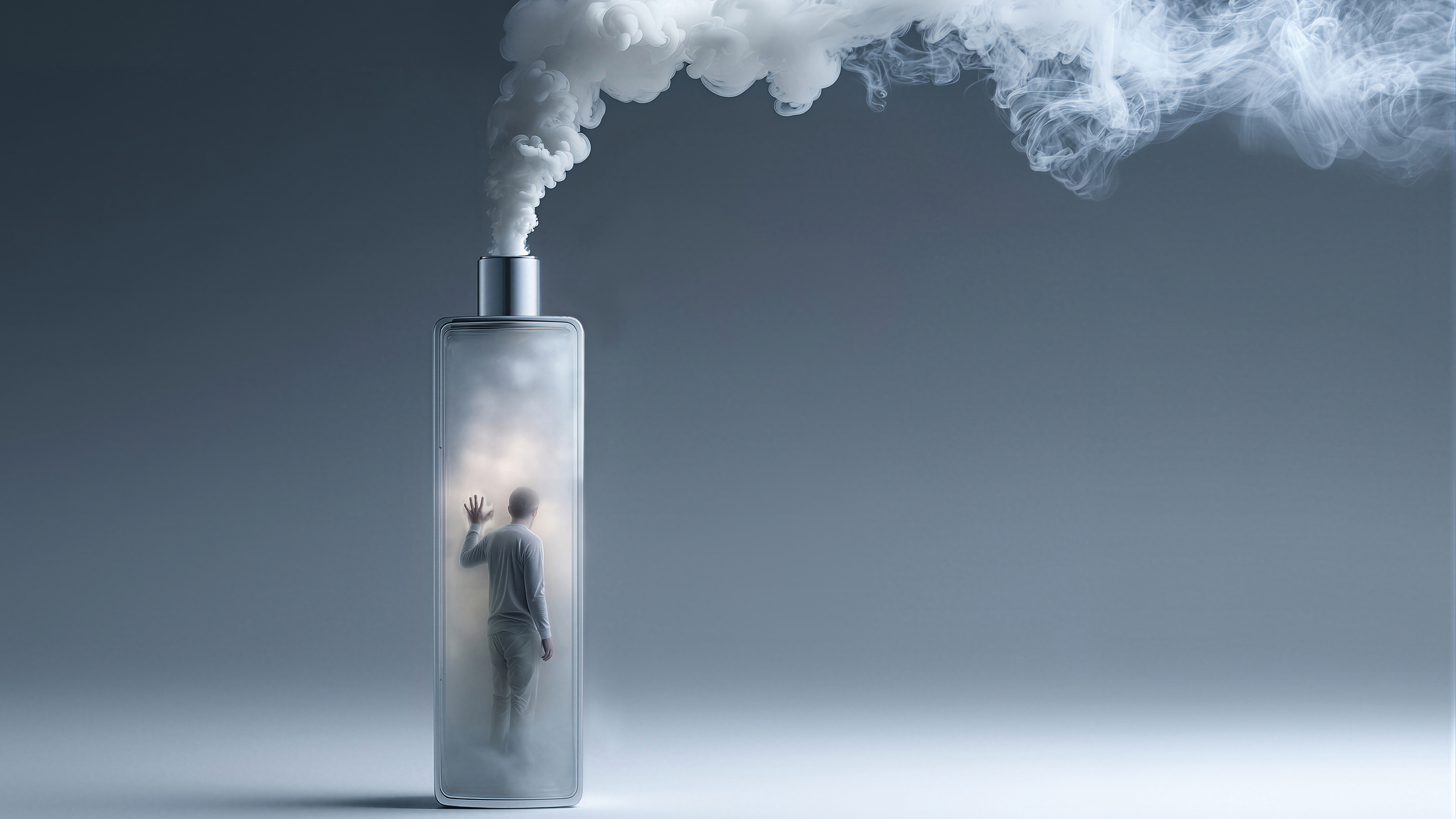
Just as the immune system can overreact to a small trigger, the heart can overreact to a small frustration. Anger can arrive suddenly without invitation, without calculation. A word misunderstood, a gesture interpreted as disrespect or a horn honked impatiently.
And instantly, the soul releases its own internal “mediators” such as adrenaline, cortisol, and tunnel vision. Then, judgment collapses, empathy becomes constricted, and perspective disappears.
What anaphylaxis is to the body, anger is to the spirit. Both are reactions far greater than the triggers that provoke them. Anger may appear to erupt in an instant, but like anaphylaxis, it is built slowly. Years of unprocessed stress, patterns of reaction learned in childhood, ego sensitivities left unexamined, and emotional habits repeated until they become automatic all lie beneath the surface. A single insult may ignite the explosion, but the invisible fuel has been accumulating quietly for years. Just as immune memory primes the body for anaphylaxis, emotional memory primes the mind for anger.
Even prophets teach us that anger is human, but mastery of anger is divine guidance.
Prophet Muhammad (peace be upon him) understood the physiology of emotion long before modern neuroscience. He taught: “When one of you becomes angry while standing, let him sit. If the anger does not leave him, let him lie down” (Sunan Abu Dawud 4782). And in another teaching, he advised ablution (wudu), saying anger is “from fire” and water extinguishes it. These are not merely symbolic instructions—they are antidotes. Sitting eases the body’s tension, lying down disarms the fight-or-flight response, and washing with water cools the face, slows the heartbeat, and interrupts the physiological surge of anger before it gains control.
These are emotional epinephrine, quick, simple, and deeply effective. They not only calm the immediate reaction, but they also slowly re-educate the emotional-memory system, changing the default response. Prophet Muhammad (peace be upon him) was teaching the spiritual equivalent of resetting immune memory, reducing oversensitivity and interrupting automatic reactions.
In the Battle of Uhud, when the archers disobeyed the Prophet’s explicit command and abandoned their posts, the consequences were severe. The Muslim army suffered painful losses. Yet the Prophet (peace be upon him) did not publicly shame those responsible, did not single them out by name, and did not allow anger to fracture the unity of the community. Even his Companions refrained from identifying them.
His calmness repaired what disobedience had damaged. His mercy became more memorable than the mistake itself. His positive approach was confirmed in the Qur’an: “So by mercy from God, [O Muhammad], you were lenient with them. And if you had been rude [in speech] and harsh in heart, they would have disbanded from about you. So, pardon them and ask forgiveness for them and consult them in the matter. And when you have decided, then rely upon God. Indeed, God loves those who rely [upon Him]” (Al Imran 3:159).
Jesus (peace be upon him) reminds us that spiritual maturity is not the absence of passion but the discipline of response: “Blessed are the peacemakers, for they shall be called children of God.”—Matthew 5:9.
James is quoted in the New Testament as follows: “Be slow to anger, for human anger does not produce the righteousness of God.”—James 1:19–20.
Moses (peace be upon him) struggled with a fiery temperament. When he struck the Egyptian man, he regretted it deeply (Qur’an 28:15–16). When he saw his people worshipping the calf, he reacted strongly—but afterward prayed for them (Qur’an 7:150).
Fethullah Gülen reminds us to shape our hearts into sanctuaries, each with a humble chair reserved for every soul God sends our way. He uses the metaphor of the heart as a sanctuary to call for emotional restraint and moral readiness in the face of others. By reserving a “humble chair” for every person we encounter, Gülen emphasizes unconditional hospitality rather than judgment or dominance. This image challenges the reflexive nature of anger, encouraging a pause between stimulus and response. In this way, it suggests that compassion can regulate emotional reactions much like balance in the immune system prevents anaphylactic overreaction.
Just as the immune system can be trained away from overreaction, the soul can be trained away from explosive anger. Both require memory to be re-written, habits to be relearned, and the inner terrain to be cultivated patiently.
To prevent anaphylaxis, we avoid triggers, strengthen resilience, and carry epinephrine. Similarly, we can prevent destructive anger, if we can cultivate the following in our spiritual journey:
With mindfulness, we can notice irritation before it grows. With self-awareness, we can know the history behind reactions. Practicing patience through remembrance (dhikr), meditation, and stillness can strengthen our resilience. Reducing chronic stressors can help us build healthy boundaries. Having generous, merciful assumptions about others reduces anger.
There is a Turkish proverb that “Sharp vinegar harms its own container.” Anger is vinegar. Before it burns others, it corrodes the heart that holds it.
Anaphylaxis teaches us how the body collapses when overwhelmed. Anger teaches us how relationships, reputations, and inner peace can collapse in a fleeting moment of emotional shock.
Let us learn to love people, to be gentle with their faults, and to show mercy, not because they are perfect, but because mercy is the epinephrine of the soul.
References
- https://www.mayoclinic.org/diseases-conditions/anaphylaxis/symptoms-causes/syc-20351468.
- Shaker MC, et al. Anaphylaxis — A 2020 practice parameter update, systematic review, and Grading of Recommendations, Assessment, Development and Evaluation (GRADE) analysis. Journal of Allergy and Clinical Immunology. 2020; doi:10.1016/j.jaci.2020.01.017.
- Cardona V, Ansotegui IJ, Ebisawa M, El-Gamal Y, Fernandez Rivas M, Fineman S, Geller M, Gonzalez-Estrada A, Greenberger PA, Sanchez Borges M, Senna G, Sheikh A, Tanno LK, Thong BY, Turner PJ, Worm M. World allergy organization anaphylaxis guidance 2020. World Allergy Organ J. 2020 Oct 30;13(10):100472. doi: 10.1016/j.waojou.2020.100472. PMID: 33204386; PMCID: PMC7607509.
- https://en.wikipedia.org/wiki/Anaphylaxis