Hundreds of times drier than the Sahara Desert—this is no riddle.
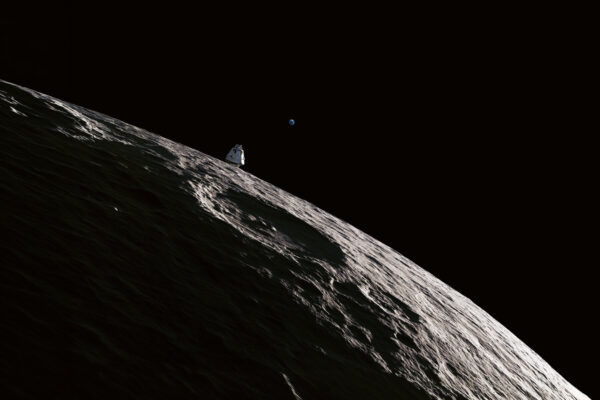
It is the Moon.
For generations, it appeared as a silent, scarred, lifeless world hanging in the darkness of our childhood skies.
Yet this ancient mystery is beginning to change. The discovery of water on the Moon raises the exciting possibility that we could one day build a sustainable habitat on our nearest neighbor.
For many years, scientists believed that the Moon had neither an atmosphere nor stable temperatures; therefore, the existence of water seemed impossible.
Water is the most essential sign of life. Naturally, the idea of finding water on the Moon first seemed unlikely, and humanity turned its attention toward the other parts of the universe.
Yet history has shown that sometimes, just when we lose interest, abandon hope, and give up the search, the universe begins to reveal its secrets.
This happened with the Moon in 1961, when a theoretical physicist, Kenneth Watson, suggested the possibility of water on the Moon.
Based on the laws of physics and the Moon’s temperature conditions, he proposed that water could exist there. He suggested that water ice might survive in permanently shadowed craters, while sunlit regions would be too warm, causing any water to evaporate. These lightless areas are called “permanently shadowed regions.” Measurements show that during the lunar night, the Moon’s surface temperature can drop to about 120 Kelvin (−153°C).
That is extremely cold. In permanently shadowed areas it may be even colder. At such low temperatures, ice does not evaporate easily. So, there is possibility that frozen water can stay stable there. In 1994, NASA’s Clementine mission orbited the Moon for two months to gather data, which suggested that ice might exist in permanently shadowed craters. Later, in 1998, the Lunar Prospector mission detected the highest concentrations of hydrogen in areas that are never exposed to sunlight. This finding increased the possibility of water ice on the Moon. However, a definitive conclusion could not be drawn because of low-resolution images.
In 2009, with the help of a special instrument called the Moon Mineralogy Mapper (M3), ISRO (the Indian Space Research Organization) launched the Chandrayaan-1 mission. This instrument was developed by NASA and created a detailed map of the Moon’s surface minerals.
After analyzing the data thoroughly, scientists confirmed in 2018 the presence of water in the form of ice within the Moon’s craters—specifically in the permanently shadowed regions.
Until 2018, scientists believed that lunar water existed only in permanently shadowed regions. However, based on data from SOFIA, NASA announced in 2020 that water was also present in sunlit areas, such as the crater.
The amount of water detected is approximately equal to a 12-ounce bottle per cubic meter of soil.
Moreover, in 2023, a new map of water distribution on the Moon showed that water is not confined to just one location. Rather, it exists in small amounts across different regions, and it is also possible that this water moves across the Moon’s surface.
This map was created using data from NASA’s SOFIA project, a flying telescope.
This map extends to the region of the Moon’s south pole, where the Artemis missions are planning to send humans back to the Moon. A robotic vehicle, the VIPER rover, will be sent first for this mission.
Recently, in 2025, the 210-kilogram (463-pound) Trailblazer spacecraft was launched on February 26, 2025, aboard a SpaceX Falcon 9 rocket. However, NASA lost contact with the spacecraft shortly after launch and officially ended the mission on July 31, 2025.
But the question is: Where does water on the Moon come from?
There are three different theories about this question.
Theory I: Formation of water by solar wind reactions
The Sun’s light and the solar wind (charged particles coming from the Sun) react with oxygen atoms on the Moon’s surface and form small amounts of water (H₂O) molecules.
Theory II: Micrometeorite impacts
When very small meteors (asteroids) collide with the Moon, they combine existing hydrogen with oxygen and create small quantities of water.
Theory III: Cold-trapped migration
Water molecules can temporarily move from shadowed regions to sunlit areas of the Moon’s surface, but they cannot survive there for long. The formation of water on the Moon is a long-term chemical process.
Water is an essential need for humans if they want to settle on the Moon in the future. Water can be consumed for drinking after purification. It can also be split into oxygen (O₂) for breathing through electrolysis.
Even hydrogen (H₂) from water can be combined with oxygen to produce rocket fuel for future Moon missions.
In this way, the Moon could function as a space station and help fuel our journey to the stars. Whether this remains a scientific possibility or develops into a practical reality for humanity remains to be seen.
References
Watson, Kenneth, Bruce Murray, and Harrison Brown. “On the Possible Presence of Ice on the Moon.” Journal of Geophysical Research 66, no. 5 (1961): 1598–1600.
Kuthunur, Sharmila. “1st Map of Moon Water Could Help Artemis Astronauts Live at the Lunar South Pole.” Space.com, March 20, 2023. https://www.space.com/moon-water-1st-map-sofia-artemis
NASA. “Lunar Trailblazer.” Accessed March 10, 2026. https://science.nasa.gov/mission/lunar-trailbl