Earlier this year, a sketch plan for a data-center development came before the planning commission in Smithfield Township, Pennsylvania. It proposed two two-story buildings, each with a footprint of roughly 125,000 square feet, along with a power substation [1].
On paper, it was a land-use proposal. For me, it changed the scale of something I had previously regarded as part of the invisible architecture of digital life. Data centers existed somewhere beyond our screens, housing the systems through which photographs, messages, searches, purchase records, and countless other traces of modern life are stored and processed. Suddenly, that hidden infrastructure had acquired a local address.
The proposal came amid a growing national debate over what such facilities may demand from electrical grids, water supplies, and surrounding communities [2]. Those questions are important. Yet another aspect of the project stayed with me. If built, the facilities would become part of the visible landscape, while the activity moving through them would remain almost entirely out of sight.
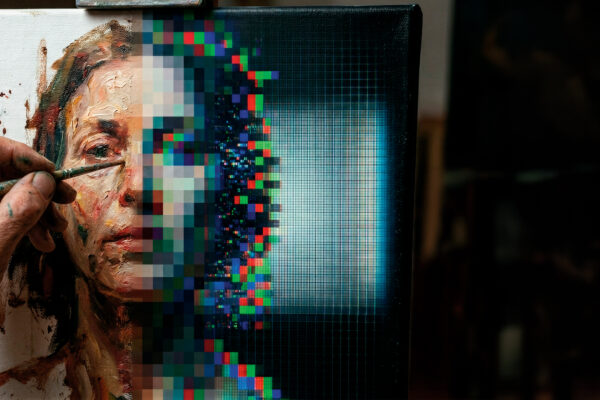
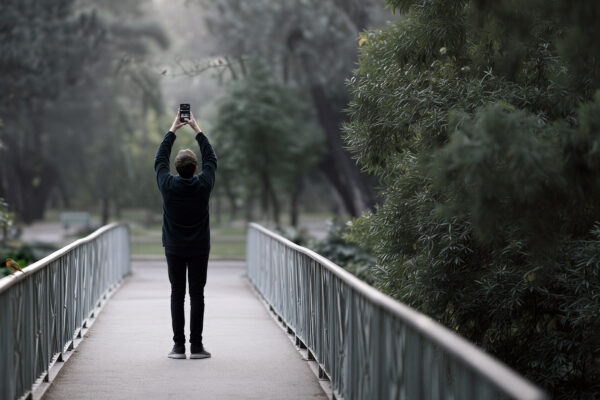
Much of that activity begins with actions so ordinary that we scarcely notice them. A website may register the page we opened, the link we followed, and how long we remained there. Cookies, tracking pixels, and browser fingerprinting can help connect one visit to another and distinguish one browser or device from many others [3].
Even a pause can become a signal.
We may stop scrolling when an image appears or remain with a video for a few seconds longer than usual. A recommendation system can treat that extra time as one indication among many when deciding what to show us next [4].
Artificial intelligence systems are increasingly capable of registering details we may not consciously intend to communicate. A person may say very little, yet features such as the tone of the voice, the pace of speech, a hesitation, or an interruption may still become part of what a system processes. When a camera is involved, a smile, a raised eyebrow, or a brief change in expression may also be registered.
These systems can gather such details alongside the other traces we leave behind. What those signals mean within the life of the person, however, remains a far more difficult question.
This helps explain why the collection of data can create unease even when it supports useful services. We seldom know how separate traces will be combined, which conclusions will be drawn from them, or when a partial account of our behavior will begin to stand in for the person we actually are. We close the page and continue with our day. The traces generated by the visit may remain somewhere beyond our sight.
As I followed the local proposal, this hidden accumulation brought a Qur’anic teaching into sharper focus for me. The Qur’an speaks of deeds that remain, witnesses that will speak, and a record that will eventually be opened before the person whose life it contains [5]. Across different passages, the same life appears to be preserved in more than one place: within human memory, both our own and that of others; in the body through which choices became actions; in the earth on which they occurred; and in the record kept by the angels.
Yet beneath this resemblance lies a fundamental difference. Digital systems collect fragments and attempt to infer a person from them. The Qur’anic account begins elsewhere: with God’s complete knowledge of the act, its intention, its circumstances, the pressures surrounding it, and the consequences that may continue long after the actor has moved on.
Accordingly, these forms of testimony bring into view a truth already fully known to God. Together, they confront the person with the life actually lived and make the justice of the judgment visible.
One reason such disclosure matters is that memory cannot carry a final moral account. Consider a message sent late at night in anger and deleted the following morning. Years later, the sender may remember the provocation more vividly than the words that followed. The recipient may no longer recall the precise wording, yet the humiliation of reading it may have remained. The event survives in both lives, though neither recollection contains it whole.
Autobiographical memory
Research on autobiographical memory helps clarify this gap. Remembering is a reconstructive process: genuine traces of experience are continually arranged through later knowledge, emotion, and the developing story we tell about ourselves [6]. We may preserve the general meaning of an encounter while altering some of its details. Over time, we can also become increasingly confident in a version of the past that sits comfortably with the person we now believe ourselves to be.
Yet forgetting does not always feel like simple erasure. At unexpected moments, a face, a sentence, or a scene from decades earlier may return with a clarity that surprises us [7]. Such moments do not establish that memory contains a flawless hidden archive of the past. They do suggest, however, that what has passed beyond the reach of ordinary recollection may not have disappeared altogether.
This gives particular force to a Qur’anic description of the Day of Resurrection. God will inform people of what they did: “God had recorded it, while they had forgotten it” (al-Mujadilah 58:6) [8].
Forgetting does not make the deed unreal. What memory no longer yields can still be brought before the person. The verse therefore places moral history beyond the limits of what we are still able—or willing—to retrieve.
The event may also remain with the person affected by it. A sentence that occupied a few seconds in the sender’s life can enter the recipient’s emotional history for years. The sender may retain the grievance and lose the words; the recipient may lose the wording and retain the injury. Neither memory contains the event whole, yet each bears something of what occurred.
A deed, then, does not always remain confined to the person who performs it. One of the Qur’an’s most familiar names for the final day appears in its opening chapter, recited daily by Muslims: Yawm al-Din, the Day of Recompense. On that day, moral accounts left unresolved in this life are brought to settlement, with each act seen together with its intention, the injury it caused, and the consequences that followed.
Memory, however, is not the only witness. “Today We will seal their mouths. Their hands will speak to Us, and their feet will testify to what they used to earn” (Ya Sin 36:65). Elsewhere, people ask their own skins why they testified against them. The answer comes from within the body: “God, who gives speech to everything, has made us speak” (Fussilat 41:21).
The image is unsettling because the mouth, our most practiced instrument of explanation, falls silent. Testimony comes from the body that carried intention into action, from the hands and feet through which an inward choice entered the world.
A deed also belongs to the place where it occurred. Surah al-Zalzalah describes the earth being shaken, releasing its burdens, and then “telling its news” because God has commanded it to do so (99:1–5).
A vigilant observer
The earth extends the field of testimony beyond the person. A room may have seemed private because no other person was present. A road may have appeared deserted. The Qur’anic image suggests that solitude never meant that the event had disappeared from the created world.
Human memories fail, physical traces fade, and places themselves may change until nothing visible remains of what occurred there. The Qur’an therefore speaks of a preservation that does not depend upon the continued survival of earthly evidence: “A person does not utter a word without a vigilant observer ready to record it” (Qaf 50:18).
What human choice brings into the world is gathered into an ordered account, kept by appointed witnesses. Alongside the testimony of the body and the earth, the angelic record forms part of the disclosure of the life actually lived.
Final judgment, then, does not remain a verdict known only to the Judge. In the record placed before them, the person encounters the life actually lived. What memory altered, what reputation concealed, and what missing evidence placed beyond human reach are gathered into an account that can no longer be displaced by a more persuasive retelling.
The Qur’an gives this convergence one of its most powerful images:
“We have bound every person’s deeds to their neck, and on the Day of Resurrection We will bring forth a record which they will find laid open. Read your record. Today you are sufficient to take account of yourself.” (al-Isra 17:13–14)
The record first appears as something bound to the person, an attachment that cannot simply be abandoned or transferred. It is then brought forth and laid open before the book is placed into the person’s right or left hand as the sign of an outcome.
These may be successive moments in the same encounter: the life accompanies the person; it becomes visible; finally, it must be received. The one who receives the book in the right hand invites others to read it. The one who receives it in the left wishes it had never been given (Qur’an, 69:19, 25).
Read your record.
The person is not merely asked to accept an accusation made by someone else. Elsewhere, the Qur’an says that the human being will be a witness against himself, even while presenting excuses (75:14–15).
In the open book, actions appear in relation to one another: what a choice became, how a word entered another person’s life, what an outwardly admirable deed was meant to accomplish, and why an apparently insignificant moment carried moral weight.
The comparison with digital surveillance now becomes more unsettling. The idea of complete divine knowledge may initially sound like surveillance without limit, extending beyond every wall and into every private thought. That possibility can inspire fear, and the Qur’an does not diminish the seriousness of being fully known.
Yet the anxiety surrounding surveillance often arises from the authority granted to an incomplete record. A system registers behavior while much of the surrounding context remains unavailable. It may preserve the exact words of a message and know very little about the history behind them. It may register a pause without knowing that a struggle took place within it. The fragment becomes dangerous when it is treated as though it were the whole person.
Divine knowledge, by contrast, does not depend upon fragments selected and interpreted by an outside observer. The act is known together with its context. The motive concealed behind a respectable explanation will be known, as will the sincerity of an act that others overlooked or misunderstood.
Such knowledge is frightening wherever we depend upon appearances. It is also essential to justice. A complete account leaves no room for hidden wrongdoing to shelter behind reputation. It also ensures that unrecognized suffering, restraint, and goodness are not lost because they never entered the public record.
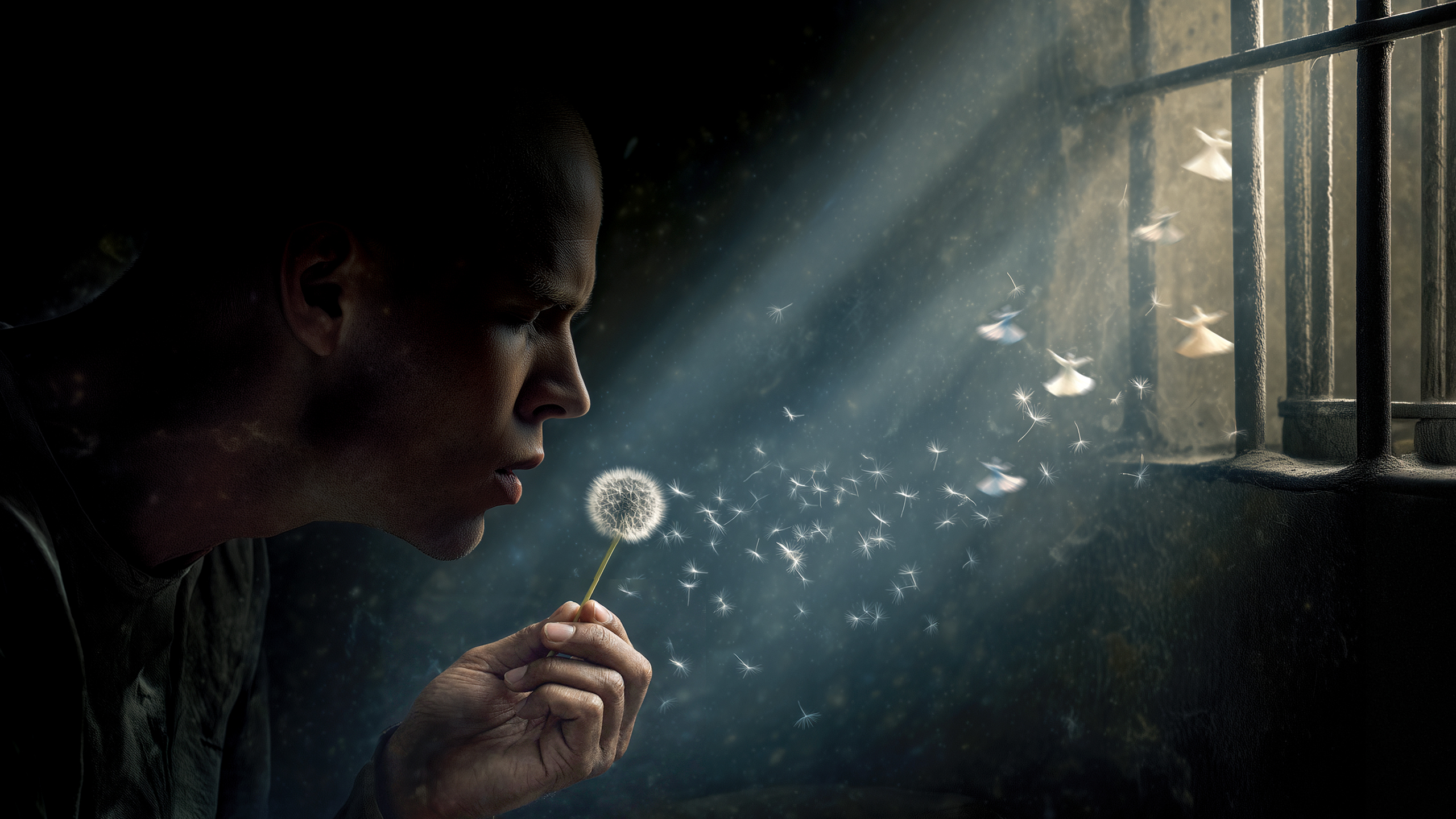
Return to the late-night message. Sometimes the words are sent and live on in more places than their author imagined. At other times, the decisive event is that the message is never sent. The sentence has already been written. A finger hesitates above the screen, and after a moment the words are deleted.
From the outside, very little has happened. No recipient carries the injury, and there may be no lasting digital trace. Yet a moral event has taken place in the restraint itself.
Even a pause can become a signal. A digital system might register the delay; it could not know that someone had stepped back from harm. God knows what happened within that pause.
The record remains open as long as life continues. Later choices may yet change the direction of the life to which earlier ones belong. Data centers preserve fragments after we have closed the page and moved on. The Qur’anic record promises a different order of disclosure, in which the traces of a life appear within the life to which they belong. One day that life will be laid open, and even the moments that seemed to leave no trace will appear with their meaning intact.
Endnotes
- Smithfield Township Municipal Center, “Smithfield Gateway Data Center—Conditional Use,” last updated June 22, 2026. The township’s project page preserves the earlier sketch-plan materials for the proposed two-building data-center development and power substation.
- Helen Coster and Valerie Volcovici, “Americans Are Angry about Data Centers. Politicians Are Feeling the Pressure,” Reuters, July 16, 2026.
- Federal Trade Commission, “How Websites and Apps Collect and Use Your Information,” September 2023. The FTC describes the use of cookies, tracking pixels, browser fingerprinting, and advertising identifiers, as well as the collection of information about pages visited and time spent on a site.
- Konstantina Christakopoulou et al., “Deconfounding User Satisfaction Estimation from Response Rate Bias,” in Proceedings of the Fourteenth ACM Conference on Recommender Systems (New York: Association for Computing Machinery, 2020), 450–55, doi:10.1145/3383313.3412208. The study examines fine-grained interaction signals and the difficulty of inferring user satisfaction or intention from observable behavior.
- This essay’s understanding of these forms of preservation as a layered and interconnected order is indebted to Said Nursi’s reflections on the preservation of human lives and deeds. See Said Nursi, “The Twenty-Sixth Word: Third Topic,” in The Words; and “The Ninth Ray,” in The Rays.
- Robyn Fivush and Azriel Grysman, “Accuracy and Reconstruction in Autobiographical Memory: (Re)consolidating Neuroscience and Sociocultural Developmental Approaches,” WIREs Cognitive Science 14, no. 3 (2023): e1620, doi:10.1002/wcs.1620.
- Dorthe Berntsen, “Involuntary Autobiographical Memories and Their Relation to Other Forms of Spontaneous Thoughts,” Philosophical Transactions of the Royal Society B: Biological Sciences 376, no. 1817 (2021): 20190693, doi:10.1098/rstb.2019.0693.
- Qur’anic translations have been lightly adapted for consistency and readability.