There is a moment in every single prayer when a grown person, able to stand, chooses to lower themselves completely. The forehead touches the ground, the spine folds, and the head, the place where we think, worry, question, decide, and carry so much of our pride, is lowered below the rest of the body. At least thirty-four times a day. For more than a billion Muslims.
It happens so often that we stop noticing how astonishing it is. A human being bows the head that so often wants to rise, to control, to be seen, to be right, and places it on the earth. Not once in a lifetime, not only in grief, and not only when life falls apart, but every day, again and again. And maybe that is why prostration means so much to me, because when my forehead is on the ground, I feel closest to Him. Lower than I have ever been, yet nearer than I could ever be while standing.
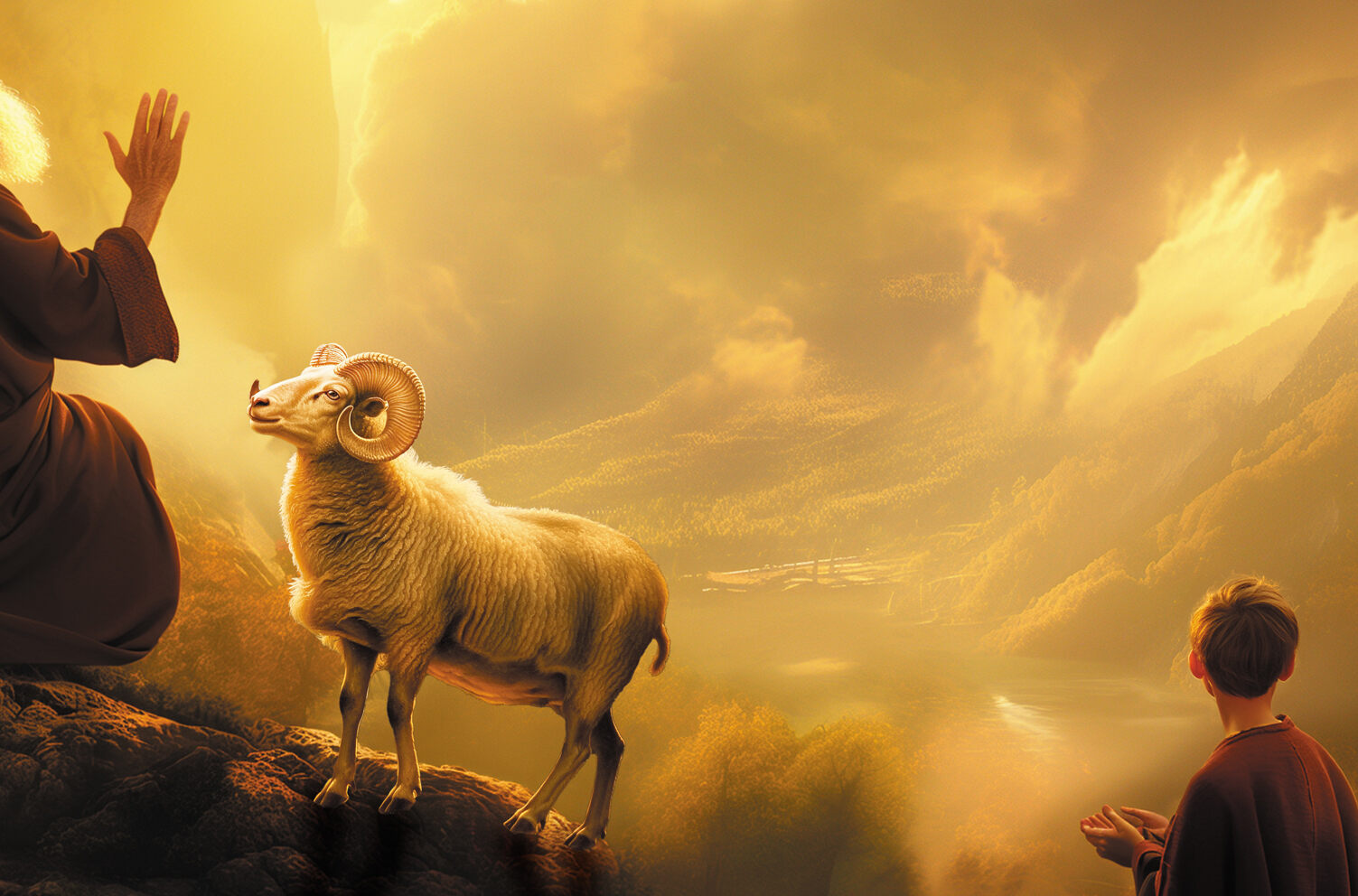
Prostration is not unique to Islam. In Judaism, Christianity, and other religious traditions, worshippers have also bowed, knelt, or lowered themselves to the ground in reverence, repentance, and surrender. The Bible likewise describes Abraham falling facedown before God in Genesis and Jesus falling with his face to the ground in prayer in Matthew. The forms and meanings may differ, but across religions, the body seems to express what words sometimes cannot: humility before something greater than ourselves.
Only in the last twenty years or so have cardiologists and neurologists begun asking what happens inside a body that lowers itself this completely, this often.
Researchers measured heart rate and blood pressure in each position of the prayer (salat): standing, bowing, prostrating, and sitting. They compared prayer performed after ablution (wudu), facing the qiblah and accompanied by recitation, with a mimed version involving the same movements without those elements. Heart rate was highest during standing and lowest during prostration. Blood pressure fell more after the actual prayer than after the mimed version, suggesting that the movements alone may not fully explain the change.
Some of it is just physics, obviously. When the head is below the heart, gravity slows the blood coming back up to the chest and the heart pumps less. I drew that curve on a whiteboard for med students more times than I could count, long before it occurred to me to connect it to the position I return to five times a day. What physics doesn’t explain on its own is why this drop shows up alongside a real quieting of the body’s stress response, the branch of the nervous system behind a racing heart and a tight chest, confirmed in a recent review of the prayer’s effects on the heart.
Blood flow to the brain may change too, as the head is now below the heart instead of above it. In a study of healthy young adults, Ghorbani and Moosavi reported a 23 percent increase in the average speed of blood flowing through the basilar artery, which supplies part of the brain, during prostration compared with sitting. They suggested that the finding might have implications for stroke patients and older adults, who already have reduced circulation.
Real prayer
The brain wave findings are still the part I find the hardest to fully understand. Doufesh and colleagues found that during prostration, the brain showed a calm but alert pattern, similar to what is seen in people who have practiced meditation for many years. What makes this even more interesting is that this pattern was stronger during real, rather than during mimed prayer. In a later study, they also found another brain rhythm linked to focused attention that was higher during real prayer (salat). So, in that moment of prostration, the brain seemed to be both deeply quiet and fully awake at the same time. I’m not sure any experiment could easily recreate that on purpose.
The rest of the body isn’t sitting this one out either. Weight shifts onto the hands, knees, and toes, engaging muscles in the chest, back, shoulders, and legs differently than standing prayer does. Prophet Muhammad (peace be upon him) gave specific guidance about this posture, instructing worshippers to prostrate properly and keep their forearms off the ground rather than resting them like a dog. This hadith, narrated by Anas ibn Malik, appears in both Sahih al-Bukhari and Sahih Muslim. Scholars have interpreted this guidance as helping protect the arm joints across a lifetime of repeated prostration, while physical therapists studying prayer as daily, low-intensity movements suggest that the repeated bending and prostration may help maintain joint flexibility over time. I’ve seen patients in their seventies with better shoulder mobility than people half their age, and more than once, prayer was the only consistent movement in their whole week. These movements were practiced for centuries before anyone had a way to measure their effects.
The tiny gap between one heartbeat and the next can tell us a lot about whether the body feels tense or at ease. It is one of the ways medicine looks at how the nervous system is responding. Research on prayer shows that the body shifts toward rest and recovery, while the stress response goes down. This is the same kind of pattern researchers often see in meditation studies. But for Muslims, it was never called meditation. It was simply prayer – salat.
Nearly every one of these studies runs the same comparison. Real prayer (Salat) against mimed prayer, same bending, same lowering of the head, once with purification, direction, and recitation, once without. The calming effect, whatever they measured it with, came out stronger in the real version every time. If prostration were just a good stretch, the two should look nearly the same. They don’t.
Prostration was already described as a kind of nearness long before any of this could be measured. In Surah Al Alaq, God says, prostrate and draw near. Prophet Muhammad (peace be upon him) said the servant is closest to their Lord while in prostration and told his companions to ask for more in that state, a hadith in Sahih Muslim from Abu Hurairah.
We are close
There’s a third verse I keep landing on, one that names an actual vessel instead of the heart or soul in the abstract. In prostration, the head drops below the heart. After considering what researchers have observed in this posture, I find myself returning to the verse: “We are closer to him than his jugular vein” (Qur’an 50:16).
Not the heart, which we might read as love. Not the soul, which might feel more abstract. A vessel. Beneath the skin, carrying blood from the brain back toward the heart, quietly participating in the circulation that sustains us. I’ve checked the carotid pulse beside that vein on more patients than I can count, two fingers beside the windpipe, feeling for the beat that says someone’s still here. That clinical familiarity makes the verse’s language especially vivid to me. And when my forehead touches the ground, its reminder of divine nearness becomes deeply personal.
At least thirty-four times a day, my body goes to a place my words can never fully reach. It folds, lowers, and returns to the ground, and somehow my heart understands before my mind can explain it. I used to think prostration was only something I owed God. I know better now. Prostration is not just the place of obedience. It is the place of nearness. It is where I feel closest to my God, my Rabb in this life, closer than when I am standing, closer than when I am speaking, even closer than when my hands are raised in supplication (dua). No one had to teach my heart to soften there. No one had to tell my mind to become still. The body knows. The soul knows. Every time my forehead touches the ground, something inside me comes home. And when I am in prostration, I do not wonder if He is near, or if He is listening. I know He is closer than my mind can grasp, hearing every word I say, every silence I carry, and every tear my prayer rug has ever soaked in.
Dr. Rubina Haleem trained as a physician before dedicating her life to raising her children and serving her community. She now works as an educator with a focus on neurodiversity and multilingual learners, and serves alongside women in her Gainesville, Virginia community, listening, caring, crying and laughing together, and growing stronger in faith side by side. She writes on faith, science, and everyday devotion for Muslim readers and beyond.
Sources
Doufesh, H., Ibrahim, F., Ismail, N. A., & Wan Ahmad, W. A. “Assessment of Heart Rates and Blood Pressure in Different Salat Positions.” Journal of Physical Therapy Science 25, no. 2 (2013): 211–214.
Doufesh, H., Ibrahim, F., Ismail, N. A., & Wan Ahmad, W. A. “Effect of Muslim Prayer (Salat) on α Electroencephalography and Its Relationship with Autonomic Nervous System Activity.” Journal of Alternative and Complementary Medicine 20, no. 7 (2014): 558–562.
Doufesh, H., Ibrahim, F., & Safari, M. “Effects of Muslims Praying (Salat) on EEG Gamma Activity.” Complementary Therapies in Clinical Practice 24 (2016): 6–10.
Yousefzadeh, F., Pirzad Jahromi, G., Mokari Manshadi, E., & Hatef, B. “The Effect of Prostration (Sajdah) on the Prefrontal Brain Activity: A Pilot Study.” Basic and Clinical Neuroscience 10, no. 3 (2018): 257–268.
Eman, Alishba, & Rao, Atif Aslam. “Salah as Medicine: A Systematic Review of Physical and Mental Health Benefits of Islamic Prayer.” Journal of Religion, Health and Society 1, no. 1 (2025): 15–24.
Suseno, Bayu. “Muslim Prayer (Salah), and Its Restorative Effect: Psychophysiological Explanation.” Asian Journal of Islamic Psychology 1, no. 1 (2023): 1–7.
Sahih al-Bukhari 822, 532; Sahih Muslim 493, narrated by Anas ibn Malik.
Qur’an 96:19, Sahih International translation.
Qur’an 50:16, Sahih International translation.
Sahih Muslim 482, narrated by Abu Hurairah.
Genesis 17:3
Matthew 26:39