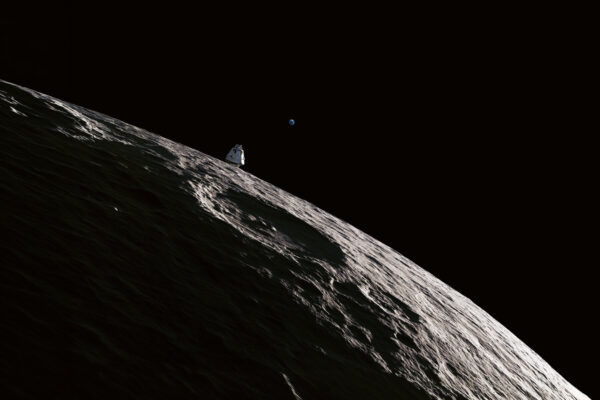
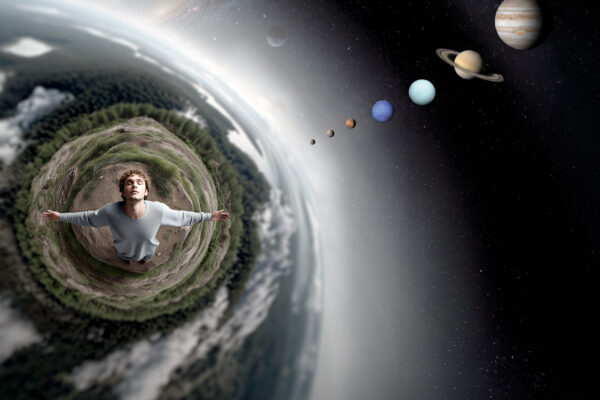
The earth is a suitable dwelling place for all living beings. There are so many conditions to make this possible that we can hardly finish listing them. The elements within the rocks that form the earth, the minerals contained in water, the gases in the atmosphere, the inclination angles, orbits, and distances of the Sun and Moon, and every visible and invisible wavelength of light reaching our world have all been adjusted within precise limits. Deserts, polar regions, rainforests, coral reefs, glaciers, and countless other habitats, all formed through the interplay of these phenomena, are each masterpieces of creation worthy of separate study.
These environments exist in relationships of mutual interaction through various transitional zones. Even a small change in one eventually affects the others over time. To prevent disruptions to ecosystem balance caused by changes that must remain within certain limits, winds and ocean currents have been assigned the role of transporting materials and maintaining equilibrium.
Nature’s calendar
Scientific data show that climate change is disrupting nature’s calendar. It causes plants to bloom earlier and shifts the breeding seasons of animals. Organisms such as mosquitoes that carry tropical diseases like malaria or dengue fever may spread farther north. Melting glaciers and changing rainfall patterns affect freshwater resources and aquatic life. Migration routes of animals change, and some species drive toward extinction. Drought-resistant plants increase while water-dependent species may disappear.
Climate conditions such as heat, cold, and the acidity of water are primary factors in the lives of animals and plants. These act as epigenetic factors influencing their bodies and functions. Both the outwardly visible characteristics (phenotypes) of living beings and their genetically encoded (genotypic) traits have been balanced in mutual harmony with environmental conditions. Indeed, biology as a whole is essentially the study of these delicate and wise balances established within living systems. From the harmony and proportion found in organs to the balance within cells and the order throughout the ecosystem, one is reminded of the wisdom behind the delicate measurements and balances as the following verses from the Qur’an convey: “Surely, We have created each and every thing by (precise) measure” (al-Qamar 54:49) and “…He Who has created seven heavens in harmony. You do not see any fault or incongruity in the creation of the All-Merciful. Look yet again: can you see any rifts?” (al-Mulk 67:3).
In addition, ar-Rahman 55:5 draws attention to the movements of the Sun and Moon before mentioning the creation of life on earth and before the establishment of the sky (atmosphere) as a protective canopy; this alludes to the importance of the movements of these heavenly bodies are. Indeed, the tides in the oceans caused by the Moon and the effects of sunlight intensity on the reproduction of organisms such as corals reveal the interconnectedness of the Sun, Moon, atmosphere, and the ecosystem.
The Qur’an also warns that this balance is being corrupted in the hands of mankind:
“Corruption has appeared on land and sea because of what people’s own hands have earned, so that God may let them taste some of the consequences of their deeds, in order that they may return to the right way.” (ar-Rum 30:41)
This verse openly points to disrupted ecological balances. The mention of corruption on land before sea may indicate that pollution and poisoning first begin on land and are then carried into rivers and seas through detergents, medicines, plastics, and other chemical waste produced by factories.
According to Mahasweta Saha, who studies marine chemistry and ecology at the Plymouth Marine Laboratory, increasing carbon dioxide levels in water disrupt the sensory systems of water fleas (Daphnia), making it harder for them to escape predators. It has also been observed that some of the most beautiful fish living among coral reefs have increasing difficulty recognizing approaching predators and begin to lose their ability to learn.
At present, climate change is presented as the sole explanation for all these developments. Yet climate change is a broad and general expression, and much more research is required to understand the underlying mechanisms involved—such as the acidification of waters, the long-term accumulation of toxic chemical waste discharged into the seas, and the alteration of marine chemistry by atmospheric gases carried by rainfall. It is now recognized that climate change can alter the chemical communication and behavior of animals living in marine, freshwater, and terrestrial environments, with potentially far-reaching consequences for the future of our planet and the balance of ecosystems. The importance of communication systems based on chemical scent signals is critical not only for regulating behaviors such as reproduction, feeding, migration, caring for offspring, hunting, and predator avoidance, but also for maintaining ecosystem balance. The fragrant chemical substances called pheromones, secreted by insects and used for communication, are vitally important. They constitute the language by which insects find their nests, describe food sources to members of the colony, locate mates during breeding periods, and warn one another of danger. These chemicals can deteriorate when temperatures exceed certain limits, potentially overturning the entire life of ant colonies, for example. Among the various forms of communication between living beings—sound, color, bodily movements, and others—substances known as infochemicals serve as scent signals both on body surfaces and within the surrounding environment. The large numbers of seabirds washing ashore dead in masses have therefore become a serious concern for ecologists.
Infochemicals influence a wide range of functions and behaviors, including predator-prey relationships. For example, sharks can detect the scent of these chemicals released by prey from astonishing distances. A shark can detect the smell of blood at concentrations as low as one part per million from as far as eight kilometers away. Likewise, any scent we perceive may in fact originate from an infochemical created for the protection or nourishment of another species. For instance, when we walk through a pine forest and detect its scent, that smell signals the presence of certain chemical compounds, yet the same scent we feel evokes entirely different responses in a human being, a bear, a reptile, or an ant.
Some infochemicals secreted by plants attract insects necessary for pollination while repelling those that might harm them. The fact that an unconscious plant synthesizes selective chemical substances and “knows” which insect species will assist it leaves the mind in amazement. In some cases, a plant under insect attack may even release chemicals warning neighboring plants of approaching danger.
The larvae of barnacles (Balanus), which attach themselves to the bottoms of boats and dock pillars, select suitable surfaces through these infochemical molecules. Certain bat species can identify the healthiest mates—with the greatest genetic diversity and the highest likelihood of producing surviving offspring—through scent alone.
Changing Infochemicals
Climate change is disrupting and altering the production of information-carrying chemical substances such as pheromones. It has been shown that every factor associated with climate change—temperature, carbon dioxide, pH levels, and others—can become disturbed and thereby disrupt the essential processes organisms use to communicate with one another.
Climate change is also reducing escape behaviors in some fish species by weakening their fear responses toward potential predators. Many fish release specific chemical substances when injured by predators or otherwise threatened. Other fish detect these warning chemicals through smell and flee. However, according to both experiments and initial field observations, when more CO₂ is absorbed into water and pH levels decline, hypoxanthine-3-N-oxide—the best studied alarm signal—undergoes irreversible changes, making it more difficult for fish to detect. Rising carbon dioxide lowers pH, increasing acidification. Ocean acidification makes it more difficult for shell-forming organisms such as mollusks and corals to build their calcium carbonate shells. Increased CO₂ levels in fish blood also trigger behavioral disorders, while rising heavy metal concentrations damage the nervous system and make it harder for fish to escape predators.
In an article published in The Conversation, Dr. Sevrine Sailley states that European fish species are migrating toward new waters. The alteration of chemical signals by climate change creates stress throughout ecosystems and causes informational disruption. According to current models, if climate change accelerates, atmospheric and marine disturbances may become far more severe. Some estimates suggest that by the end of this century North Sea cod and Alaska pollock populations may decline by 30–40 percent. Atlantic mackerel abundance may decrease by 25 percent, while sardines may experience only a modest 5 percent increase despite shifting 245 kilometers northward. Tuna populations may increase by 40 percent; however, bluefin tuna are predators that feed on herring, mackerel, and other schooling fish. Thus, an increase in tuna would not be welcome news for fisheries but rather a cause for concern.
According to projections, other predators such as dolphins, seals, and seabirds will also be affected by climate change and may struggle to obtain their preferred fish species. The pressure on fish populations will further increase if overfishing continues in the Northeast Atlantic fisheries, 24 percent of which are already considered unsustainable.
By 2050, if a “moderate” emissions path is followed, waters surrounding the United Kingdom are expected to warm by approximately 1°C. If emissions continue rising uncontrollably, the increase could reach 2–3°C by the end of the century. At the same time, the food sources fish depend on—such as small plankton—may decline by up to 30 percent.
If global warming leads to breakdowns in chemical communication between the environment and plants and animals, or between disease-causing pathogens and the organisms they infect, it seems inevitable that we humans—living within the same ecosystem—will also be affected.
To prevent these potential disaster scenarios, research projects aimed at preserving ecological balances should be encouraged in light of the principles outlined in the holy scriptures: viewing nature not as a commodity to be exploited but as a trust from our Creator; avoiding excessive consumption and wastefulness; and refraining from placing ourselves in danger through our own hands. Humanity must carefully consider what its actions bring about and what they take away while safeguarding the Divine wisdom and measures embedded within the ecosystem.